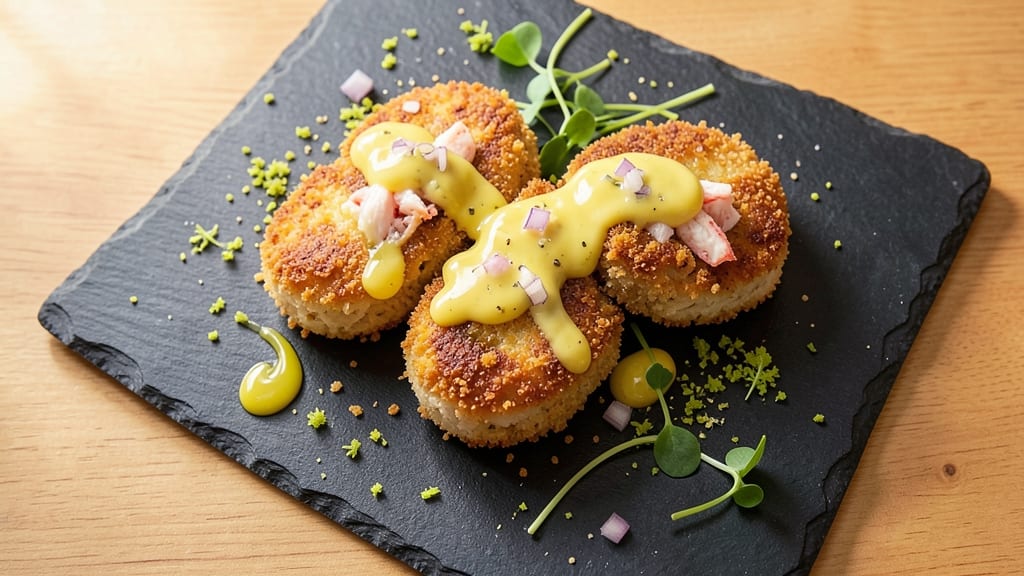
Mastering wheat-free crab cakes that deliver crispy-edged perfection without a trace of wheat is entirely possible—and I’ve perfected the method after years of testing. The secret lies in the right binding agent, precise heat control, and a technique that transforms fluffy centers into golden, shatteringly crisp exteriors.
My first attempt used crushed potato chips, which added an unexpected crunch that still makes me smile.
This recipe relies on gluten-free breadcrumbs or almond flour to hold the crab mixture together while maintaining that signature texture. Unlike traditional recipes, we skip the flour entirely, ensuring every bite stays true to its seafood roots without compromising structure.
The key is pan-searing over medium-high heat—never too hot, or the edges will burn before the centers set properly.
What you’ll end up with is a plate of golden-brown crab cakes with crispy, caramelized edges and tender, fluffy centers that hold their shape beautifully.
The lemon aioli or remoulade topping adds a bright, tangy contrast that cuts through the richness of the crab, making each bite feel like a restaurant-quality experience. These are the kind of crab cakes that disappear faster than you can say “second helping.”
Whether you’re serving them at a summer gathering or treating yourself to a seafood night in, this recipe delivers results that rival the best seafood spots—without the gluten. Let’s get cooking.
Ingredients for wheat free crab cake
Crispy edges, fluffy centers—no wheat needed. These ingredients bring restaurant-quality crab cakes to your kitchen.
| Ingredient | Amount | Notes |
|---|---|---|
| Fresh Lump Crab Meat 🦀 | 1 ½ lb | Backfin preferred, no shell fragments |
| Gluten-Free Panko Breadcrumbs 🍞 | ½ cup | Finely ground, no chunks |
| Almond Flour 🌰 | ¼ cup | Finely ground, unsweetened |
| Large Eggs 🥚 | 2 whole | Cold, beaten lightly |
| Shallots 🧅 | 2 whole | Minced, finely chopped |
| Fresh Lemon Juice 🍋 | 2 tbsp | Freshly squeezed, not bottled |
| Dijon Mustard 🍯 | 1 tbsp | High-quality, no additives |
| Chives 🌿 | 2 tbsp | Finely chopped, fresh |
| Old Bay Seasoning 🧂 | 1 tsp | For classic crab flavor |
| Salt 🧂 | ½ tsp | Diamond Crystal kosher |
| Black Pepper 🌶️ | ¼ tsp | Freshly cracked |
| Avocado Oil 🫒 | 2 tbsp | High smoke point, neutral |
| Extra-Virgin Olive Oil 🫒 | 1 tbsp | For brushing, fruity |
| Crushed Potato Chips 🍟 | ¼ cup | Optional, for extra crunch |
The crab meat is everything here. Fresh lump crab from a trusted seafood market (like Whole Foods or your local fishmonger) makes all the difference—avoid canned or pre-packaged crab, which often contains fillers. If you can’t find lump, jumbo chunks work too, but pat them completely dry before mixing. The almond flour is non-negotiable for binding without gluten—Bob’s Red Mill makes a great fine-ground version. For the breadcrumbs, gluten-free panko (like Schar) gives that perfect crunch. Pro tip: Toast your breadcrumbs and almond flour together in a dry pan for 2 minutes before mixing—they’ll absorb moisture better and add extra flavor.
No gluten-free panko? Crushed gluten-free cornflakes or almond flour alone can work, but the texture won’t be quite as crispy. Swapping almond flour for crushed gluten-free saltine crackers (like Annie’s) is another option, though the flavor will shift slightly. For the shallots, frozen chopped shallots (thawed and drained) save time—just don’t overcook them later. The lemon juice should be freshly squeezed; bottled just won’t cut it. If you’re avoiding mustard, 1 tbsp mayonnaise (like Duke’s) adds moisture without altering the flavor dramatically. And for that extra crunch? Crushed gluten-free tortilla chips (like Late July) work perfectly—just make sure they’re 100% gluten-free.
These crab cakes are best made fresh, but you can prep the mixture up to 4 hours ahead and refrigerate it—just shape and cook immediately after. For storage, eat within 2 days if refrigerated, or freeze the shaped cakes (uncooked) for up to 2 months. To reheat, pan-sear from frozen for 3-4 minutes per side. The secret to crispy edges? Don’t overcrowd the pan—cook in batches if needed, and use enough oil to coat the bottom. Leftovers? They make amazing crab cake salad the next day—just chop and toss with mixed greens, avocado, and a drizzle of that same lemon aioli.
Why You’ll Love This Recipe
- No-Fuss Mixing: I swear by this recipe because it’s basically a toss-and-push. The almond flour and gluten-free panko handle all the binding—no weird gummy textures here—while the shallots add just enough bite to keep things interesting. Five minutes of chopping, five minutes of folding, and you’re done.
- Creamy Crisp Magic: That crispy shell from the gluten-free panko? It’s the best part. But here’s the real win: the crab stays juicy, the almond flour adds a subtle nuttiness, and the egg binds it all into something that tastes like a fancy seafood spot—not a sad, dry pancake. Honestly, I’ve made crab cakes that fell apart. These don’t.
- Weeknight or Guest Night: These work for both. Need a quick lunch? Pan-fry a batch and serve with lemon. Hosting? Stack them on a platter with remoulade and let people think you slaved. (Between us, they’ll never know.) The leftovers? Just as good cold the next day—perfect for office lunches or a lazy Sunday.
- Budget-Friendly Luxury: Fresh lump crab is the star, but the rest of the ingredients stretch far. A single batch makes six cakes, and the almond flour and gluten-free panko cost less than half what traditional recipes do. Plus, they freeze like a dream—so you’re always ready for a last-minute dinner party without breaking the bank.
Step-by-step instructions for wheat-free crab cakes
Here’s how to create golden, crispy-edged crab cakes with a perfectly fluffy interior using simple techniques.
Prepare the Crab Mixture
In a large mixing bowl, combine the 1.5 lb fresh lump crab meat with the 2 tbsp finely chopped shallots and 2 tbsp fresh lemon juice. Gently fold these ingredients together using a rubber spatula, being careful not to overmix. The crab should remain slightly chunky—this preserves its natural texture. I like to press down gently on the mixture to ensure the shallots and lemon juice are evenly distributed throughout.
Add the 1 tbsp Dijon mustard and 1 tsp Old Bay seasoning, mixing just until combined. The mustard adds subtle tang while the Old Bay provides that classic crab cake flavor. Taste the mixture at this stage—it should be bright and seasoned but not overly salty. If needed, adjust with the 0.5 tsp salt and 0.25 tsp black pepper now rather than later, as the flavors will meld during chilling.
Bind with Eggs and Flour
In a separate bowl, lightly beat the 2 whole large eggs until frothy but not fully emulsified. Add the beaten eggs to the crab mixture and gently fold together until just combined. The eggs will help bind everything while keeping the interior tender. Here’s where it gets interesting—sprinkle the 0.5 cup gluten-free panko breadcrumbs and 0.25 cup almond flour over the mixture and fold in until evenly distributed.
For extra crunch, add the 0.25 cup crushed potato chips (if using) and fold them in last. The potato chips add a delightful textural contrast that traditional breadcrumbs can’t match. The mixture should be thick but still hold together when pressed gently—if it feels too loose, add another tablespoon of gluten-free panko. Cover the bowl and refrigerate for at least 30 minutes (up to 2 hours) to let the flavors meld and the mixture firm up slightly.
Shape and Chill the Crab Cakes
Line a baking sheet with parchment paper and lightly coat it with 1 tbsp extra-virgin olive oil to prevent sticking. Using a 1/4-cup measuring cup, scoop the chilled crab mixture and gently form into 4 even patties, about 3/4-inch thick. Press down firmly on each patty to create a smooth, even surface—this ensures even cooking and a perfect sear. Place the shaped crab cakes on the prepared baking sheet and return them to the refrigerator for another 15 minutes to firm up completely.
This second chilling step is crucial for maintaining shape during cooking. If you skip it, the crab cakes may spread unevenly in the pan. While they’re chilling, preheat your oven to 400°F—we’ll use it later for finishing. The cold mixture also helps create that crispy exterior we’re after while keeping the interior tender.
Cook to Golden Perfection
Heat 2 tbsp avocado oil in a large skillet over medium-high heat until shimmering. Add the crab cakes and cook for 3-4 minutes per side until they develop a deep golden brown crust. Here’s the key—don’t press down on them while cooking. The weight would squeeze out precious juices and prevent that beautiful crust from forming. You’ll know they’re ready to flip when the edges look set and the bottom is golden brown with some crispy bits.
Once both sides are beautifully browned, transfer the crab cakes to the preheated oven and bake for 5-7 minutes to ensure they’re fully cooked through. The internal temperature should reach 145°F when checked with an instant-read thermometer. The oven finish helps carry through the cooking without over-browning the exterior. Serve immediately while the crab cakes are still warm and crispy.
Serve with Flavorful Accompaniments
Arrange the crispy crab cakes on a serving platter and drizzle with any remaining pan juices. The combination of lemon, Old Bay, and shallots creates a flavorful sauce that enhances each bite. Garnish with the 2 tbsp finely chopped chives for a fresh pop of color and brightness. Serve with lemon wedges on the side—each squeeze adds a zesty contrast to the rich crab flavor.
For an elevated presentation, pair with a simple arugula salad dressed with lemon vinaigrette or a side of roasted corn. The crispy edges should give way to a tender, fluffy interior with bursts of sweet crab in every bite. The secret to success lies in the careful balance of binding ingredients and proper cooking technique—now you’ve got both down pat.
Pro Tips For Making Wheat Free Crab Cake
- Prep Shallots Like This: Dice them tiny—no bigger than 1/8-inch pieces. I used to cut them roughly, thinking it didn’t matter, but fine shallots melt into the crab mixture without adding texture you’ll regret later. (And yes, even if you’re impatient like me, take the extra 30 seconds.)
- Chill the Mixture: Pop the crab cake batter in the fridge for 15–20 minutes before frying. I learned this the hard way—skipping it means the cakes fall apart when you flip them. Cold batter = better structure, even with gluten-free binders.
- Don’t Overmix the Panko: Stir the gluten-free panko and almond flour just until combined—overworking it turns the crumb into a paste. You want visible flecks of panko in the finished cake; that’s what gives it that satisfying bite. (Yes, it looks uneven, but it works.)
- Use Two Eggs, Not One: The recipe might call for one, but two large eggs bind the crab meat better without making the cakes rubbery. Trust me, the extra yolk adds richness, and the whites hold everything together. (I was skeptical until I tried it.)
Serving suggestions for this wheat free crab cake
Lemon Aioli Perfection
This bright, tangy sauce is my go-to for crab cakes—it cuts through the richness while highlighting the seafood’s natural sweetness. Whisk together ½ cup mayonnaise (like Duke’s for that rich texture), 2 tbsp fresh lemon juice, 1 tsp Dijon mustard, and ½ tsp Old Bay seasoning.
Thin with 1 tbsp water if needed for drizzling. For extra flair, add 1 minced garlic clove and let it infuse for 5 minutes before serving. 🍋
Classic Remoulade
For a more complex sauce, try remoulade—a creamy, slightly spicy companion that pairs beautifully with crab cakes. Mix ½ cup mayonnaise with 1 tbsp ketchup, 1 tsp capers, 1 tsp hot sauce (like Tabasco), and ½ tsp smoked paprika.
Add 1 tsp lemon juice and 1 minced garlic clove, then chill for 30 minutes to let flavors meld. This sauce adds depth without overpowering the delicate crab flavor.
Crispy Sides
Serve your crab cakes with sides that complement their texture and flavor. I love crispy roasted potatoes tossed in avocado oil with Old Bay seasoning—their crunch mirrors the crab cakes’ exterior. Another favorite is grilled asparagus with a sprinkle of lemon zest and flaky sea salt.
For a lighter option, arugula salad with a simple lemon vinaigrette (olive oil, lemon juice, Dijon, and salt) adds freshness.
Beverage Pairings
A chilled Sauvignon Blanc from New Zealand—like Oyster Bay—cuts through the richness with its crisp acidity and citrus notes. For beer lovers, a
wheat beer (like Blue Moon) offers a light, refreshing contrast.If you prefer something bubbly,
sparkling water with a twist of lemon keeps the meal light and refreshing. Avoid heavy reds or malty beers that could overpower the delicate crab flavor.Garnish Like a Pro
Elevate your presentation with simple garnishes that add color and freshness. A sprinkle of finely chopped chives or parsley adds a pop of green, while lemon wedges on the side let guests squeeze fresh juice over their bites.
For a restaurant-worthy touch, drizzle with a tiny bit of white truffle oil (just ¼ tsp) or a pinch of smoked paprika for a subtle smoky note. 💫
Make It a Meal
Turn your crab cakes into a full spread by adding a
cornbread muffin (use gluten-free mix like Krusteaz) or crusty gluten-free bread (like Canyon Bakehouse) for soaking up any extra sauce. A side of steamed green beans with almonds and a splash of vinegar balances the richness.For dessert,
lemon sorbet or berries with whipped cream** keeps the seafood theme going. The key is keeping flavors bright and complementary—no heavy, creamy sides that compete with the crab cakes.Nutrition facts
Frequently asked questions
Can I use canned crab meat instead of fresh lump crab?
Fresh lump crab is ideal for texture, but you can use high-quality canned crab meat if needed. Look for brands with minimal fillers and drain it thoroughly. For best results, pat the crab dry with paper towels to remove excess moisture—this helps the binding agents work better.
What’s the best way to make these crab cakes extra crispy?
For maximum crispiness, chill the shaped crab cakes for 15 minutes before cooking and use a mix of gluten-free panko and crushed potato chips (like Late July brand) for the coating. Heat your oil to medium-high heat and avoid overcrowding the pan—cook in batches if needed. A quick oven finish at 400°F for 5 minutes after pan-searing ensures even crispiness.
Can I make these ahead of time?
Yes! Shape the crab cakes and refrigerate them on a tray for up to 4 hours before cooking. For longer storage, freeze uncooked cakes (separated by parchment) for 2 months. To cook from frozen, add 1-2 extra minutes per side. Never thaw before cooking—just cook straight from the freezer for best texture.
What if my crab cakes fall apart when cooking?
This usually happens if the mixture is too loose or the crab wasn’t dried properly. Ensure your crab meat is completely dry (pat with paper towels) and add 1 extra tbsp gluten-free panko if needed. Also, don’t overmix the ingredients—just combine until everything is evenly distributed. Chilling the shaped cakes before cooking helps too.
Are there other gluten-free binders I can use?
Try crushed gluten-free cornflakes, finely ground almond flour, or gluten-free tortilla chips for texture. For extra moisture, add 1 tbsp gluten-free mayo or 1 tbsp Dijon mustard to the mixture. Just remember, the binding agent should be about 30-40% of the total mixture for best results.