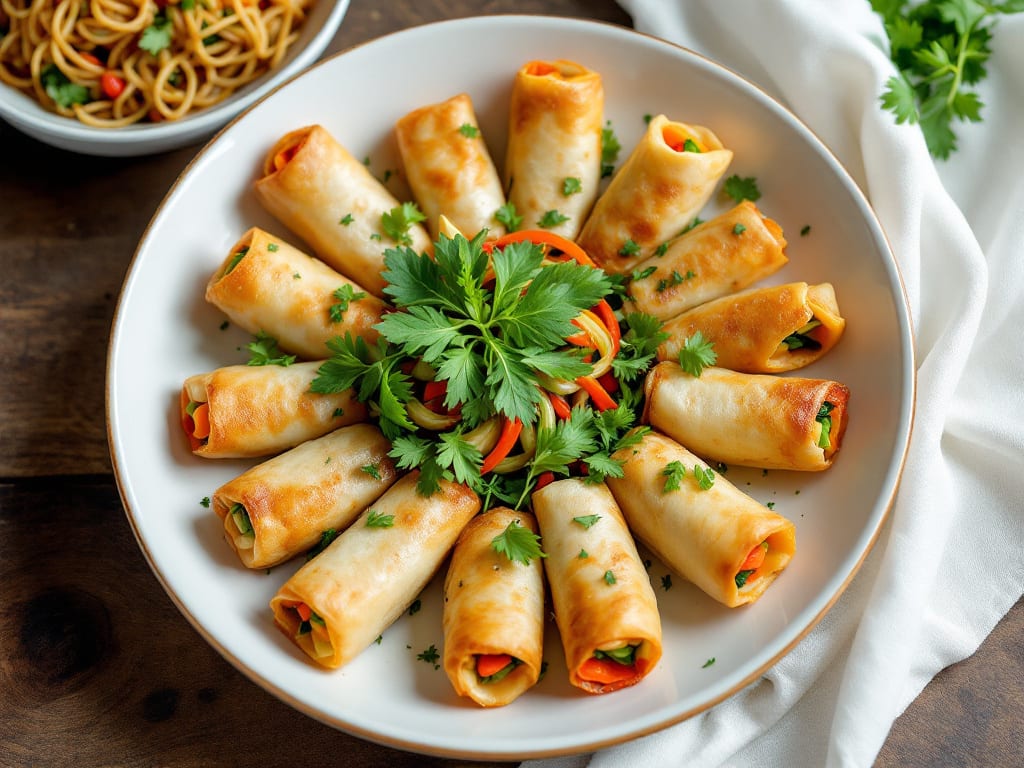
Recreating Pf Chang’s vegetable spring rolls at home delivers that signature crispy texture and silky filling without the restaurant price tag. The secret lies in properly prepping the vegetables—shredding cabbage, julienning carrots, and slicing mushrooms—then combining them with seasoned tofu for a filling that stays tender yet flavorful.
I’ve perfected this method over countless batches, ensuring the wrappers stay pliable and the final rolls achieve that golden, shatteringly crisp exterior.
What sets these apart is the balance of fresh herbs and aromatic seasonings—ginger, garlic, and a touch of soy sauce—that elevate the filling beyond basic vegetable rolls. The key technique involves lightly steaming the filling before wrapping, which prevents soggy centers while keeping the texture delicate.
Whether you fry or bake, the result is a restaurant-quality appetizer that’s perfect for parties or a weeknight snack.
By the time you serve these with a tangy sweet chili or peanut sauce, your guests will never guess they’re homemade. The contrast of crispy wrappers and silky fillings makes every bite satisfying, while the fresh herbs add a bright, aromatic finish.
This recipe delivers professional results with simple techniques—no shortcuts, just proven methods for perfect spring rolls every time.
Pair with extra sauce for dipping, or serve alongside other Asian-inspired dishes for a full menu. The beauty of these rolls is their versatility—they reheat well, freeze beautifully, and can be customized with additional vegetables like bell peppers or water chestnuts.
Here’s how to make them exactly like Pf Chang’s, but better.
Ingredients for pf chang’s vegetable spring rolls
Twelve crispy spring rolls with silky fillings—no shortcuts, just restaurant-quality texture at home.
| Ingredient | Amount | Notes |
|---|---|---|
| Rice Paper Wrappers 🍱 | 24 whole | 6-inch size, store in water |
| Extra-Firm Tofu 🍲 | 1 ½ lb | Pressed, cubed for filling |
| Green Cabbage 🥬 | 4 cups | Shredded, outer leaves removed |
| Carrots 🥕 | 2 medium | Julienned, peeled, 1/8-inch strips |
| White Mushrooms 🍄 | 8 oz | Sliced, stems removed |
| Fresh Cilantro 🌿 | ½ cup | Stems removed, chopped |
| Fresh Thai Basil 🌿 | ¼ cup | Lightly packed, leaves only |
| Garlic Cloves 🧄 | 6 cloves | Minced, peeled |
| Fresh Ginger 🌿 | 1 ½ tbsp | Grated, peeled |
| Soy Sauce 🍶 | 3 tbsp | Low-sodium preferred |
| Rice Vinegar 🍶 | 2 tbsp | Seasoned, not unseasoned |
| Sesame Oil 🫒 | 1 tbsp | Toasted, for aroma |
| Vegetable Oil 🫒 | 2 cups | For frying, high smoke point |
| Diamond Crystal Kosher Salt 🧂 | ½ tsp | Fine grain, for seasoning |
| Ground White Pepper 🌶️ | ¼ tsp | Freshly ground preferred |
The rice paper wrappers are non-negotiable—6-inch size from Asian markets or the international aisle at Whole Foods yields the best results. Store them in a sealed container with a damp paper towel to prevent drying. For the tofu, extra-firm is essential—press it for 20 minutes to remove excess moisture, then cube into 1/2-inch pieces. The cabbage should be green, crisp, and free from yellowing outer leaves, while the carrots need to be firm and bright orange. Mushrooms should be white, not brown or slimy. Fresh herbs like cilantro and Thai basil add the signature aromatic finish—look for vibrant leaves at the market, not wilted bunches.
No rice paper wrappers? Sugar wafer sheets can substitute in a pinch, though texture will differ. Swap the tofu for firm tempeh if preferred, but it requires longer pressing. The soy sauce can be replaced with tamari for gluten-free, while rice vinegar can be omitted if using lime juice instead. For a deeper flavor, add 1 tbsp fish sauce—though this would make it non-vegetarian. The sesame oil is crucial for aroma; toasted varieties from Trader Joe’s or Penzeys elevate the dish. If you’re short on time, pre-shredded cabbage works, but freshly shredded ensures better texture. The mushrooms can be swapped for shiitake for a more umami-rich profile.
Store uncooked spring rolls between layers of parchment paper in an airtight container for up to 24 hours—they’ll soften slightly but maintain shape. For longer storage, freeze them uncooked for up to 3 months—thaw in the fridge overnight before frying. Once fried, keep at room temperature for 2 hours max due to the oil. Reheat in a 350°F oven for 5-7 minutes to restore crispiness. The filling reheats beautifully, though the wrappers lose some crunch—best enjoyed fresh. Portion into individual serving containers with sauce on the side for easy grab-and-go meals.
Why You’ll Love This Recipe
- No-Fuss Assembly: I swear, these spring rolls are the only takeout I miss because they’re this easy. Just pan-fry the tofu until it’s golden (no fancy skills needed), julienne the cabbage and carrots in 5 minutes, and let the rice paper do the heavy lifting—dip, roll, crisp. My kids think I’m a genius, but honestly? It’s just folding paper.
- Crunchy-Creamy Magic: That first bite—where the outside shatters like a perfect chip and the inside gives way to tender tofu and mushrooms? It’s the kind of contrast that makes you pause mid-bite. The secret’s in the pan-fry: tofu gets caramelized, mushrooms release their umami, and the cabbage stays just crisp enough. No sauce needed.
- Lunchbox Hero: Between us, these are my go-to for packed lunches—and they impress at potlucks. Wrap them in parchment paper, toss in a container, and they stay fresh for days. Or serve them at room temp with sweet chili sauce for a zero-effort appetizer that actually looks fancy. My book club’s been asking for the recipe for months.
- Budget Crunch-Saver: Tofu and cabbage are basically free, and a pack of rice paper lasts forever. I made 12 of these for $8 and had leftovers for three lunches. Plus, the filling stretches—add spinach or bell peppers if you’re feeling wild. It’s the kind of meal that makes grocery day less stressful. (Yes, even on a Tuesday night.)
Step-by-step instructions for crispy vegetable spring rolls
Here’s the precise method to achieve restaurant-quality texture and flavor with these delicate wraps.
Prepare the Silky Tofu Filling
Press the 1.5 lb extra-firm tofu for 20 minutes using a clean kitchen towel and heavy object. This removes excess moisture that would make your filling soggy. Cut the pressed tofu into ½-inch cubes and transfer to a mixing bowl.
In a separate small bowl, combine the 3 tablespoons soy sauce, 2 tablespoons rice vinegar, 1 tablespoon sesame oil, 0.5 teaspoon diamond crystal kosher salt, and 0.25 teaspoon ground white pepper. Pour this marinade over the tofu cubes and toss gently to coat evenly. Let the mixture marinate for at least 15 minutes at room temperature – this ensures maximum flavor absorption and prevents the tofu from absorbing oil during frying.
After marinating, drain any excess liquid from the tofu but don’t rinse. The residual marinade will contribute to the umami depth of your filling. Keep the marinated tofu covered while you prepare the remaining vegetables.
Prep and Combine All Fillings
In a large mixing bowl, combine the shredded 4 cups green cabbage, julienned 2 medium carrots, and sliced 8 oz white mushrooms. Add the minced 6 cloves garlic and grated 1.5 tablespoons fresh ginger to the vegetable mixture. Toss everything together gently but thoroughly to distribute the aromatics evenly.
Add the marinated tofu cubes to the vegetable mixture and combine with your hands, being careful not to break up the tofu pieces. Fold in the chopped 0.5 cup fresh cilantro and 0.25 cup fresh Thai basil, reserving a small handful of each herb for garnish later. The filling should be moist but not dripping – if it appears too dry, lightly mist with 1 teaspoon water. This ensures your spring rolls hold together during frying.
Real talk: The filling should feel like damp sand when you squeeze it gently. If it’s too wet, you’ll have messy rolls that fall apart during frying. If it’s too dry, your rolls will be tough rather than silky.
Assemble the Spring Rolls
Fill a shallow dish with warm water – this prevents the rice paper wrappers from drying out while you work. Dip one wrapper at a time into the water at a slight angle for 5-10 seconds until pliable but not soggy. I like to work with two wrappers at once to maintain efficiency.
Lay the softened wrapper on a clean work surface at a diamond shape. Spoon approximately ¼ cup of filling onto the lower third of the wrapper, leaving about 1 inch of space at the bottom. Here’s where precision matters: Fold the bottom corner over the filling, then fold in the left and right sides toward the center. This creates a neat, compact roll that will fry evenly.
Roll the wrapper tightly from the bottom up, using your fingers to press the filling into a compact cylinder. Moisten the top edge with water and seal by folding it down. Repeat with remaining wrappers and filling, working quickly to prevent the rice paper from drying.
Fry Until Golden and Crispy
Heat 2 cups vegetable oil in a deep fryer or heavy pot to 350°F. Use a candy or deep-fry thermometer to monitor the temperature – this precision is crucial for achieving that perfect crispy texture without burning the wrappers. Maintain the oil at this temperature throughout the frying process.
Fry the spring rolls in batches of 3-4 at a time to avoid overcrowding, which would lower the oil temperature. Fry for 2-3 minutes until the wrappers turn a beautiful golden brown color. You’ll see tiny bubbles form around the edges – that’s your signal that they’re ready. Use a slotted spoon to transfer the fried rolls to a wire rack or paper towel-lined plate.
Don’t skip the resting period: Let the spring rolls drain on the rack for 2-3 minutes before serving. This allows excess oil to drain away while maintaining that crispy exterior. The internal temperature should reach 165°F when checked with an instant-read thermometer for food safety.
Serve Immediately with Fresh Garnishes
Arrange the crispy spring rolls on a serving platter and immediately sprinkle with the reserved fresh cilantro and Thai basil. The contrast between the warm, crispy rolls and cool herbs adds both visual appeal and freshness to each bite.
Serve with your favorite dipping sauce – a simple combination of 2 tablespoons rice vinegar, 1 tablespoon soy sauce, and 1 teaspoon sesame oil works perfectly. The sauce should be thin enough to coat the back of a spoon but thick enough to cling to the rolls without dripping.
Here’s the thing about these spring rolls – they’re best enjoyed immediately while the wrappers maintain their perfect crispiness. The filling stays warm from the residual heat of the frying oil, creating that ideal contrast of textures with each bite.
Pro Tips For Making Pf Chang’S Vegetable Spring Rolls
- SOAK WRAPPERS RIGHT: Fill a shallow dish with warm (not boiling) water and let the rice paper sit for 30–45 seconds—just until pliable. Over-soaking makes them mushy, and under-soaking turns them brittle. I learned this the hard way after wrestling with a spring roll that tore apart mid-roll.
- CUT TOFU SMALLER: Dice the extra-firm tofu into ½-inch cubes, not thin strips. The larger surface area crisps better in the pan, and it holds together when wrapped. Thin strips? They’ll turn to mush by the time you finish rolling.
- SALT THE CABBAGE: Toss shredded cabbage with ½ teaspoon salt and let it sit for 5 minutes before draining. This removes excess water, so your spring rolls don’t get soggy. Skip it, and you’re basically wrapping a wet paper towel.
- FRY IN BATCHES: Don’t crowd the pan—fry 3–4 spring rolls at a time over medium heat for 2–3 minutes per side. Too many at once steams them instead of crisping. Sounds tedious, but it’s the only way to get that golden crunch.
Troubleshooting your pf chang’s vegetable spring rolls
Wrapper Issues
If your rice paper wrappers crack or tear during assembly, they’re either too dry or not properly softened. Dip each wrapper in warm water for 10-15 seconds until pliable but not translucent.
I keep a bowl of warm water nearby and work quickly to prevent drying. For extra strength, brush the edges with a tiny bit of water before sealing. 💫
Soggy Fillings
Overly wet fillings cause messy rolls that fall apart during frying. The tofu should be pressed thoroughly for 20 minutes to remove excess moisture. If your filling feels too damp, add 1 tablespoon cornstarch to absorb moisture.
I also recommend steaming the vegetable mixture for 2 minutes before combining with tofu to draw out excess liquid. 🥬
Uneven Cooking
Spring rolls cooking unevenly usually means inconsistent oil temperature. Maintain your oil at 350°F using a thermometer—I recommend the Thermoworks Thermapen. Fry in batches of 3-4 rolls to avoid temperature drops. If one side browns faster, gently flip it with tongs to ensure even cooking. 🌡️
Oily Rolls
Excessively oily rolls happen when the filling isn’t properly drained or the oil temperature fluctuates. After frying, transfer rolls to a wire rack instead of paper towels to let excess oil drip away.
For a lighter option, try air-frying at 375°F for 8-10 minutes, spraying with oil instead of deep-frying. 🍳
Herb Separation
Fresh herbs like cilantro and Thai basil often separate from the filling. To prevent this, chop them finely and mix thoroughly with the wet ingredients. I also recommend adding 1 teaspoon xanthan gum to the filling mixture for better cohesion.
For extra flavor without separation, blend the herbs with 2 tablespoons water into a paste before adding. 🌿
Nutrition facts
Frequently asked questions
Can I make these spring rolls without deep-frying?
For a lighter version, bake them at 375°F for 15-18 minutes on a wire rack over a baking sheet (sprayed with oil). Brush with a light oil glaze before baking for extra crispiness. Air-frying at 375°F for 8-10 minutes also works well—just spray with oil halfway through. The texture won’t be as crispy as fried, but they’ll still be delicious.
How do I store leftover spring rolls?
Store uncooked spring rolls between parchment paper in an airtight container for up to 24 hours in the fridge. For longer storage, freeze uncooked rolls for 3 months—thaw overnight in the fridge before frying. Once fried, keep at room temperature for 2 hours max due to oil. Reheat in a 350°F oven for 5-7 minutes to restore crispiness. The filling reheats beautifully, though wrappers lose some crunch.
What’s the best way to make the filling extra flavorful?
Boost flavor by adding 1 tablespoon fish sauce (non-vegetarian) or 1 teaspoon miso paste for umami depth. For a smoky touch, include ½ teaspoon smoked paprika. Also, lightly steam the vegetable mixture for 2 minutes before combining with tofu—this enhances natural sweetness and texture. Fresh herbs like Thai basil and cilantro are key for that signature aroma.
Can I use pre-shredded coleslaw mix instead of fresh cabbage?
Yes, but fresh cabbage yields better texture and flavor. Pre-shredded mix often contains added moisture or preservatives that can make your filling soggy. If using it, squeeze out excess liquid with a clean towel and pat dry. For extra crispness, add 1 tablespoon cornstarch to the filling mixture to absorb any lingering moisture. Freshly shredded cabbage stays crunchier and absorbs flavors better.
Why did my spring rolls fall apart during frying?
This usually happens when the filling is too wet or the wrappers aren’t sealed properly. Ensure your tofu is pressed for 20 minutes to remove excess moisture, and steam the vegetable mixture for 2 minutes before combining. Seal wrappers tightly by moistening the edges with water. If the filling still feels too damp, add 1 tablespoon cornstarch to bind it. Work quickly to prevent wrappers from drying out.