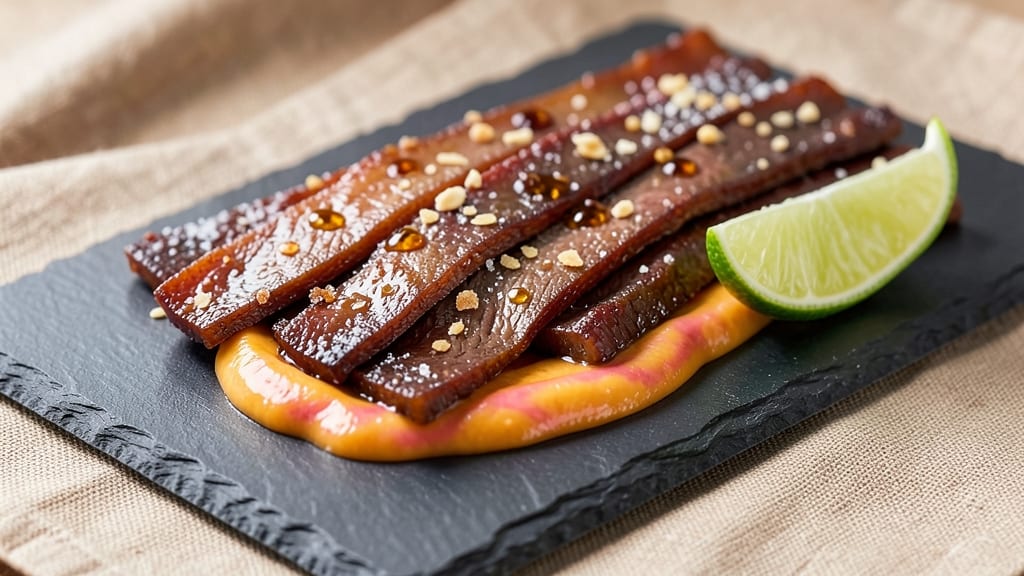
This mango habanero beef jerky recipe delivers a perfect balance of tropical sweetness and fiery heat that lingers long after the first bite. 🌟 The key lies in marinating lean beef strips in a carefully calibrated blend of mango purée and habanero extract—enough heat to excite the palate without overwhelming it.
I perfected this technique after years of experimenting with fruit-infused jerky, and the results speak for themselves: chewy, flavorful strips with a sweet-spicy kick that pairs beautifully with grilled meats or tropical sides.
The process is straightforward but requires precision: thinly sliced beef, a precise curing salt mixture, and controlled dehydrating temperatures to ensure safety and texture. Unlike traditional jerky, this version uses mango as both a tenderizer and flavor carrier, while habanero extract delivers heat without the need for fresh peppers.
The marinade works overnight, allowing the flavors to penetrate deeply, so you get that signature sweet heat in every bite.
What you’ll end up with is restaurant-quality jerky that’s perfect for snacking, camping trips, or gifting. The mango’s natural sugars caramelize slightly during dehydration, creating a subtle depth of flavor, while the habanero adds a slow-building heat that keeps your taste buds engaged.
This isn’t just jerky—it’s a flavor experience that transforms a simple protein into something extraordinary.
Serve with grilled pineapple, tropical salsa, or even as a topping for tacos to amplify the sweet-spicy profile. The recipe scales easily, so you can make a batch to enjoy all week. Let’s get started on crafting jerky that’s as impressive as it is delicious.
Ingredients for mango habanero beef jerky
Four pounds of beef, tropical fruit, and a kick of habanero—this isn’t your grandma’s jerky.
| Ingredient | Amount | Notes |
|---|---|---|
| Lean Beef Top Round 🥩 | 2 lb | Thinly sliced against grain |
| Pure Mango Purée 🥭 | 1 cup | No sugar added, 100% fruit |
| Habanero Extract 🔥 | 2 tsp | Adjust for desired heat level |
| Apple Cider Vinegar 🍎 | ½ cup | For tenderizing and acid balance |
| Brown Sugar 🍚 | ¼ cup | Enhances caramelization |
| Granulated Garlic 🧄 | 1 tbsp | For aromatic depth |
| Ground Black Pepper 🌶️ | 1 tsp | Freshly cracked for intensity |
| Instant Curing Salt #1 🧂 | 1 ½ tsp | Non-negotiable for safety |
| Smoked Paprika 🌶️ | 1 tsp | Adds subtle smokiness |
| Fresh Lime Juice 🍋 | 2 tbsp | Brightens flavor profile |
| Extra-Virgin Olive Oil 🫒 | 1 tbsp | Coats strips for even drying |
| Toasted Coconut Flakes 🥥 | ¼ cup | Optional for tropical crunch |
The beef is everything here. Top round is lean enough to dehydrate properly but still holds flavor—sirloin works too, but it’s pricier. Grab the pre-sliced kind from the meat counter to save time, or slice it yourself against the grain for maximum chewiness. If you’re buying a whole cut, ask the butcher to slice it thinly—1/8-inch is ideal. The mango purée should be unsweetened; brands like Mangonista or Trader Joe’s make this easy. For habanero extract, Melinda’s is my go-to—it’s consistent and potent, so start with the 2 teaspoons and adjust if you’re sensitive to heat. The curing salt is non-negotiable: Pink Himalayan or Diamond Crystal are safe choices, but always use Insta-Cure #1 for jerky.
No habanero extract? Fresh habanero purée works—just blend 1 pepper with 1 tablespoon water and strain—but it’s messier and less consistent. Subbing brown sugar? Honey or agave adds moisture, so reduce by 10% to avoid stickiness. Running short on lime juice? Key lime juice has more tartness, or use lemon juice at half the amount. The coconut flakes are optional but add a tropical crunch—toast them in a dry pan for 2 minutes for extra flavor. For a milder version, swap the habanero extract for jalapeño extract or 1 teaspoon cayenne pepper. If you’re dehydrating in a hot climate, add 1 extra teaspoon of curing salt to prevent spoilage.
Marinate the beef overnight in the fridge—12-24 hours lets the flavors sink in. The curing salt starts working immediately, so don’t skip this step. For dehydrating, 160°F for 4-6 hours is ideal, but check after 3 hours—thinner slices dry faster. Store in an airtight container with parchment paper between layers to prevent sticking. Keeps for 2-3 weeks in the pantry or 6 months frozen. The heat mellows slightly over time, so it’s even better the next day. Pack a batch in vacuum-sealed bags for camping trips—it stays fresh for weeks.
Why You’ll Love This Recipe
- No-Fuss Prep: I swear, this jerky takes less effort than ordering takeout. Slice the beef thin, toss it in a marinade of mango purée and habanero extract—no fancy techniques, just 15 minutes of hands-on time before the dehydrator does the rest.
- Sweet Heat Magic: That first bite? Pure contradiction—tangy apple cider vinegar cuts through the brown sugar’s caramelized bite, while the habanero lingers like a tropical sunburn. Honestly, it’s the kind of flavor that makes you forget you’re eating jerky at all.
- Snack Attack Everywhere: Stash it in your gym bag for post-workout fuel, pack it in lunchboxes for kids who’ll actually eat it, or serve it at parties when you want something that isn’t cheese and crackers. It’s the one snack that works for road trips, tailgates, or just lazy Sunday afternoons.
- Budget Bulk: A single pound of top round stretches into three servings, and the mango purée and vinegar stretch further than you’d think. I’ve made this for under $5 a batch—enough to keep my pantry stocked for weeks without breaking the bank. (Yes, even on a Tuesday night.)
Step-by-step instructions for mango habanero beef jerky
Here’s how to craft jerky with a perfect balance of tropical sweetness and fiery habanero kick.
🔪 Step 1: Prep the Beef with Precision
Freeze the 2 lb lean beef top round for 30 minutes to firm it up—this makes slicing much easier. Using a sharp knife, slice against the grain into strips about ¼-inch thick and ½-inch wide. You want even thickness for consistent drying.
Arrange the strips on a baking sheet lined with parchment paper, making sure they don’t overlap. Cover and refrigerate for 1 hour to keep them chilled while you prepare the marinade. This cold start prevents the meat from cooking prematurely.
👨🍳 Step 2: Create the Tropical Marinade
In a large bowl, whisk together the 1 cup pure mango purée, 0.5 cup apple cider vinegar, 0.25 cup brown sugar, 1 tbsp granulated garlic, 2 tbsp fresh lime juice, and 1 tbsp extra-virgin olive oil. This forms the sweet-tangy base that tenderizes the beef and carries the tropical flavors.
Add the 2 tsp habanero extract, 1 tsp smoked paprika, 1.5 tsp instant curing salt #1, and 1 tsp ground black pepper. Mix until the salt and spices dissolve completely. The marinade should coat the back of a spoon—this ensures maximum flavor penetration.
🥘 Step 3: Marinate and Coat Thoroughly
Remove the beef from the refrigerator and transfer it to a resealable plastic bag. Pour the marinade over the strips, sealing the bag tightly. Massage the marinade into the meat for 2-3 minutes until every strip is evenly coated. This step is crucial—don’t skip it!
Refrigerate the bagged beef for 12-24 hours, turning the bag occasionally to ensure even distribution. The acid in the vinegar and lime juice will begin breaking down the meat fibers, while the curing salt preserves the texture. Here’s where the magic happens—let it work its time.
🔥 Step 4: Dry the Jerky to Perfection
Preheat your dehydrator to 160°F. Arrange the marinated beef strips on the dehydrator trays, making sure they don’t touch. Leave about ¼-inch space between each strip for proper air circulation. This temperature is critical—too hot and the outside will dry before the inside cooks.
Dry for 4-6 hours until the jerky is firm to the touch and no longer pliable. You’ll know it’s done when it bends slightly but doesn’t feel moist inside. The edges should be slightly darker than the center, indicating even drying throughout.
🍽️ Step 5: Finish and Store
Let the jerky cool completely on the dehydrator trays before handling. Once cool, transfer to an airtight container and sprinkle with 0.25 cup toasted coconut flakes for that final tropical crunch. The coconut adds texture contrast that balances the chewy jerky perfectly.
Store in the refrigerator for up to 2 weeks or freeze for 3 months. Each piece should deliver a perfect harmony of sweet mango, smoky paprika, and habanero heat that lingers just enough to satisfy your craving for bold flavors.
Pro Tips For Making Mango Habanero Beef Jerky
- Trim the Fat, Keep the Flavor: Top round’s lean, but don’t skimp on trimming—strip every last bit of fat and silver skin before slicing. I learned this the hard way when my jerky turned greasy and soggy; the fat traps moisture and dulls the mango-habanero punch.
- Marinate for 24 Hours (No Less): The magic happens in the fridge, not the dehydrator. Twenty-four hours lets the habanero extract mellow while the vinegar and sugar break down the beef’s fibers—any less, and you’ll get a harsh, uneven bite. (Yes, even if you’re impatient like me.)
- Balance the Heat First: Taste your marinade before slathering it on. Habanero extract is potent—start with half the suggested amount, then adjust. I once burned through a batch because I ignored this; now I mix a small batch first and let it sit for 10 minutes to judge the kick.
- Dehydrate in Stages: Start your dehydrator at 160°F (71°C) for the first 4 hours to render fat and set the crust, then drop to 140°F (60°C) to finish. After burning three batches at high heat, I realized low-and-slow is the only way to get chewy, not brittle, jerky.
Troubleshooting your mango habanero beef jerky
Uneven Drying Issues
If your jerky dries faster on the edges than the center, it’s likely due to uneven air circulation or inconsistent beef thickness. I’ve seen this happen when strips overlap on dehydrator trays—always leave ¼-inch space between each piece.
For stubborn spots, flip the strips halfway through drying. If using a home oven, prop the door open with a wooden spoon to improve airflow at 160°F. 🌡️
Thicker slices take longer to dry, so adjust your dehydrating time accordingly. If the edges are dry but the center feels moist, extend drying by 1-2 hours—never rush this step, or you risk spoilage.
For extra insurance, use a meat thermometer; the internal temperature should reach 160°F at the thickest part.
Marinade Not Sticking
If the marinade slides off the beef instead of clinging, your strips might be too dry. Before marinating, pat the beef strips with a paper towel to remove excess moisture, but don’t overdo it—they should still feel slightly damp.
For stubborn spots, use a pastry brush to coat the strips thoroughly after massaging them in the bag. A 1 tbsp extra-virgin olive oil—added to the marinade—helps it adhere better.
If the marinade separates (like oil floating on top), whisk it again before using. For extra grip, add ½ tsp xanthan gum—it’s a game-changer for keeping flavors locked in. Store-bought marinades often contain this thickener, but homemade ones need it.
Excessive Stickiness
Sticky jerky usually means too much sugar or honey in the marinade. The 0.25 cup brown sugar—called for in the recipe—is the max; any more will cause caramelization during drying, leading to a gummy texture.
If you notice stickiness, reduce sugar by 1-2 tbsp—the mango purée already adds natural sweetness. For a quick fix, sprinkle the finished jerky with cornstarch—it absorbs excess moisture and adds a subtle crunch.
Humidity is another culprit. If your kitchen feels damp, dehydrate the jerky in shorter bursts (e.g., 2 hours on, 1 hour off) to let moisture escape. A desiccant packet—like those in shoe boxes—placed near the dehydrator trays can help absorb excess humidity during drying.
Heat Too Overpowering
If the habanero heat feels overwhelming, start with 1 tsp extract—not the full 2 tsp. For a milder version, swap the extract for ½ tsp cayenne pepper—it’s less potent but still adds warmth.
If you’ve already marinated the beef, reduce the habanero extract by half and add 1 extra tbsp brown sugar—it balances the heat without altering the drying process.
For a sweeter counterbalance, toss the finished jerky with toasted coconut flakes—they add a tropical crunch that mellows the heat. A squeeze of fresh lime juice on the side also helps reset your palate between bites.
Jerky Turning Gray
Grayish jerky is a sign of oxidation—common when beef isn’t properly sealed during marinating or dehydrated too long. Always use a resealable plastic bag—not a glass container—for marinating to prevent air exposure. If the jerky turns gray during drying, it’s likely overcooked.
The ideal jerky should be deep mahogany—not gray or pale. For a richer color, add ½ tsp liquid smoke—it mimics the smoky depth of traditional jerky without altering the flavor significantly.
To prevent this, dehydrate at 160°F—never higher. If using an oven, avoid the broiler, as it can scorch the surface. For extra protection, store finished jerky in an airtight container with parchment paper—**it keeps moisture out and preserves color.
Nutrition facts
Frequently asked questions
Can I use fresh habanero peppers instead of extract?
Yes, but with caution! Blend 1 fresh habanero with 1 tablespoon water, then strain to remove seeds for milder heat. Start with just ½ pepper to test your heat tolerance—fresh peppers pack more intensity than extract. The purée will add moisture, so reduce the apple cider vinegar by 1 tablespoon to maintain balance.
How do I adjust the sweetness or heat level?
For less heat, reduce habanero extract by ½ teaspoon or swap for ½ teaspoon cayenne pepper. For more heat, add ½ teaspoon extract but increase brown sugar by 1 tablespoon to balance. To make it sweeter, add 1 extra tablespoon mango purée or ½ teaspoon vanilla extract for depth.
Can I make this jerky without a dehydrator?
Use an oven set to 175°F with the door propped open 2 inches for airflow. Place strips on a wire rack over a baking sheet and dehydrate for 3-5 hours, flipping halfway. For a smoky twist, add ½ teaspoon liquid smoke to the marinade. Monitor closely—ovens vary in heat distribution!
Why does my jerky sometimes turn out chewy vs. tough?
Chewy jerky results from proper slicing against the grain and even drying at 160°F. Tough jerky often means slices were too thick or dried too fast. For best texture, aim for ¼-inch thick strips and check for flexibility—jerky should bend slightly but not feel moist. If using lean beef, add 1 teaspoon soy sauce to the marinade for extra tenderness.
What are the best ways to serve this tropical jerky?
Pair it with grilled pineapple, cooling cucumber salad, or tropical salsa to balance the heat. It’s also fantastic in tacos, charcuterie boards, or as a protein boost in trail mix. For a dessert twist, crumble over vanilla ice cream—the sweet-spicy combo is unexpected but delicious!