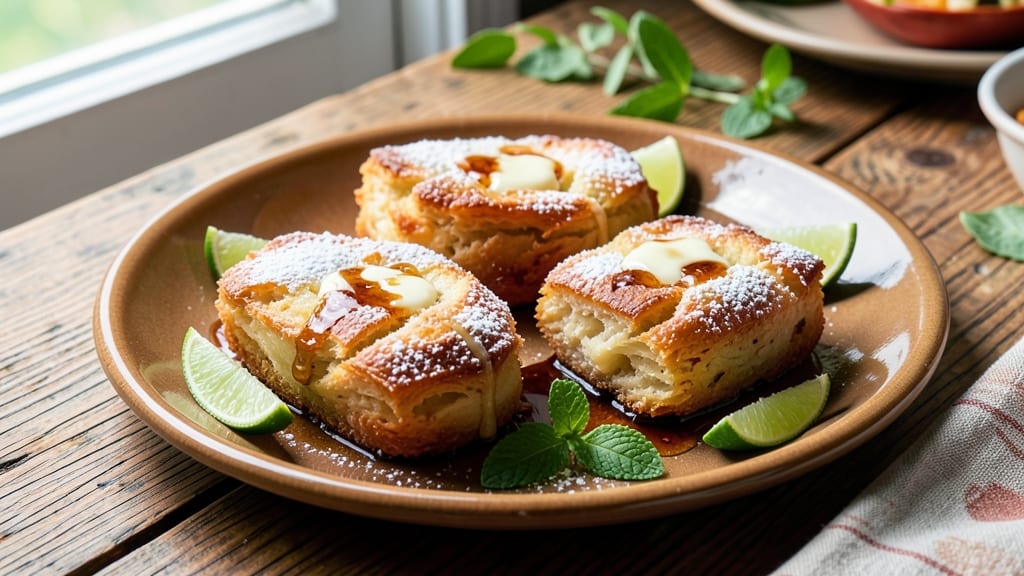
This Caribbean fried bakes recipe brings the golden, spiced-crunch tradition of Jamaican kitchens straight to your table—where crispy exteriors hide pillowy, rum-infused centers. 🌟 The secret lies in the dough’s perfect balance of nutmeg, cinnamon, and just enough spiced rum to elevate it from ordinary to unforgettable.
I first discovered this recipe while researching West Indian baking techniques, and it became an instant family favorite during our Portland winters.
The dough is simple but precise: flour, milk, yeast, and warm spices create a tender yet sturdy base that transforms into golden, crackling bakes when fried to perfection. The key is maintaining the right oil temperature—too hot, and they brown too quickly; too cool, and they absorb too much oil.
With just 30 minutes of active prep time and 15 minutes of frying, you’ll have a batch that’s worth every calorie.
What makes these fried bakes truly special is their versatility—they’re delicious spread with butter and jam for breakfast, served alongside curried stews for dinner, or even enjoyed as a sweet treat with condensed milk.
The aroma alone will transport you to a Caribbean market, while the texture offers that satisfying crunch with a surprise juicy interior that keeps everyone coming back for more.
Whether you’re making these for a Sunday brunch or a festive gathering, this recipe delivers restaurant-quality results with a touch of home. Let’s get started on creating your own batch of these irresistible, spiced-crunch classics.
Ingredients for caribbean fried bakes
Just twelve ingredients transform into golden, rum-infused fried bakes with crispy exteriors and juicy centers.
| Ingredient | Amount | Notes |
|---|---|---|
| All-Purpose Flour 🌾 | 3 ½ cups | Sifted for light texture |
| Whole Milk 🥛 | 1 ½ cups | Room temperature for best rise |
| Active Dry Yeast 🍞 | 2 ¼ tsp | 1 packet (7g equivalent) |
| Granulated Sugar 🍚 | ½ cup | Feeds yeast and balances spices |
| Unsalted Butter 🧈 | ½ cup | Cold, cubed for dough |
| Spiced Rum 🍹 | 2 tbsp | Dark rum for authentic flavor |
| Ground Cinnamon 🌿 | 1 ½ tsp | Freshly ground preferred |
| Ground Nutmeg 🌶️ | ½ tsp | Freshly grated nutmeg better |
| Ground Allspice 🌶️ | 1 tsp | Key to Caribbean flavor |
| Salt 🧂 | ½ tsp | Kosher or sea salt |
| Vegetable Oil 🫒 | 4 cups | For frying, 350°F temperature |
| Powdered Sugar 🍚 | ¼ cup | For dusting after frying |
The yeast is non-negotiable here—Bob’s Red Mill or Saf-Instant work best. If your pantry yeast is past its prime (older than 6 months), grab a fresh packet. The rum adds depth, so Havana Club or Gosling’s are my go-tos—anything over 40% proof works. For the spices, McCormick’s ground spices are reliable, but if you’ve got whole spices, grind them fresh. The nutmeg should be freshly grated for that bright, aromatic kick. I always double-check the yeast expiration date—nothing worse than flat bakes.
No spiced rum? Apple cider or extra vanilla extract can mimic the warmth, though it won’t have the same depth. Running out of allspice? Cinnamon plus a pinch of cloves gets you close. The powdered sugar is just for finishing, but if you’re out, a quick sprinkle of cinnamon sugar works too. For the oil, vegetable or canola are neutral and affordable—avoid olive oil, it burns too easily. And trust me on the cold butter—it creates those perfect flaky layers in the dough.
The dough keeps for 24 hours in the fridge, covered tightly. For longer storage, freeze portions for up to 3 months. Once fried, these stay crispy for 2 days if you store them in an airtight container with parchment between layers. I always make extra—they freeze beautifully and reheat perfectly. Pro tip: Keep a thermometer handy for the oil—350°F is critical—too hot and they burn, too cool and they soak up oil.
Why You’ll Love This Recipe
- No Yeast Struggles: I’ve ruined dough before—this recipe’s yeast activation is foolproof. Just toss the warm milk, sugar, and yeast together, let it sit for 5 minutes, and boom. No waiting hours for proofing, no second-guessing if it’s ready.
- Buttery Crisp Magic: That golden, shatteringly crisp exterior? All thanks to the butter and milk combo. The outside’s got texture, the inside’s soft—like biting into a cloud with a cracker shell. Honestly, it’s the kind of bake that makes you want to eat it straight from the pan.
- Breakfast or Brunch Hero: Serve them warm with jam and tea for a lazy Sunday, or pack a batch for Monday mornings. They reheat beautifully—no sad, dry leftovers here. My kids grab them on the go, and my husband insists they’re better than store-bought pastries.
- Pantry Staple Power: Five ingredients you already own. No specialty trips, no last-minute shopping. The flour and butter stretch further than you’d think, and the milk adds richness without breaking the bank. Between us? This is my go-to when I’m low on cash but still want something special.
Step-by-step instructions for Caribbean fried bakes
Here’s how to make these golden, rum-kissed bakes with perfectly juicy centers every time.
👨🍳 Step 1: Activate the Yeast and Mix the Dough
In a small bowl, combine the 1.5 cups whole milk (warm to about 110°F—it should feel warm to your wrist but not hot) with the 0.5 cup granulated sugar and 2.25 tsp active dry yeast. Let this sit for 5-10 minutes until it becomes frothy and bubbly. This tells you your yeast is alive and ready to work.
In a large mixing bowl, whisk together the 3.5 cups all-purpose flour, 1.5 tsp ground cinnamon, 0.5 tsp ground nutmeg, 1 tsp ground allspice, and 0.5 tsp salt. Add the yeast mixture and the 2 tbsp spiced rum to the dry ingredients. Mix until just combined—you’ll still see some flour streaks. Then cut in the 0.5 cup cold unsalted butter (leave it in chunks) using a pastry cutter or your fingers until the dough comes together.
🥘 Step 2: Knead and Rest the Dough
Turn the dough onto a lightly floured surface and knead for 8-10 minutes until smooth and elastic. The dough should spring back when you press it with your finger. If it feels too sticky, add a little more flour 1 tablespoon at a time—but don’t overdo it or your bakes will be dense. Shape into a ball, place in a lightly oiled bowl, cover with a damp towel, and let rise in a warm place for 1-1.5 hours or until doubled in size.
Here’s the thing—don’t rush this step. The longer the dough rests, the more flavor develops. You’ll know it’s ready when the dough puffs up noticeably and leaves an indent when you press it gently with your finger. If your kitchen isn’t warm, place the bowl near a slightly warm oven with the light on to help it rise faster.
🔥 Step 3: Shape and Second Rise
Punch down the risen dough and divide it into 4 equal pieces (about 8 ounces each). Roll each piece into a smooth ball, then flatten slightly into a 1-inch thick round. Place on a parchment-lined baking sheet, cover with a damp towel, and let rise again for 30-45 minutes until puffy. This second rise ensures those light, airy centers we’re after.
While the dough rises, preheat your oven to 375°F. I like to do this about 15 minutes before the dough is ready—it gives the oven time to fully heat up and ensures even cooking. The bakes should be golden brown and puffy when they come out of the oven, not flat or pale.
🍳 Step 4: Fry to Golden Perfection
Heat 4 cups vegetable oil in a deep fryer or heavy pot to 350°F. Use a deep-fry thermometer to monitor the temperature—it’s crucial for getting that perfect crunch without burning. Fry the bakes 2 at a time (don’t overcrowd the pot) for 3-4 minutes per side until they’re deep golden brown and cooked through. They should float when ready—this is your visual cue.
Real talk: the oil temperature drops when you add the bakes, so keep an eye on it. If it starts smoking, turn off the heat for a minute to let it cool down before continuing. Drain the fried bakes on a wire rack or paper towels, then immediately dust with the 0.25 cup powdered sugar while they’re still hot. This gives that classic Caribbean finish.
Pro Tips For Making Caribbean Fried Bakes
- Test Yeast First: Skip the guesswork—mix a pinch of yeast with warm milk and a teaspoon of sugar, then wait 5–10 minutes for it to foam. If it doesn’t bubble, your bakes will turn out dense and flat. (Yes, even if you’re impatient like me.)
- Butter Up the Pan: Use cold, cubed butter instead of melted—it browns better and adds flavor without burning. Scatter the cubes in the hot oil first, let them sizzle, then add the dough. The crust will be crispier, not greasy.
- Don’t Overwork the Dough: Handle the dough just enough to combine—over-kneading makes fried bakes tough. Press it gently into the pan, then let it rest 10 minutes before frying. (Your future self will thank you.)
- Fry in Batches: Crowding the pan drops the oil temperature, leading to soggy bakes. Fry 2–3 at a time max, and keep the oil at 350°F (175°C). If it smells like burning, it’s too hot—wait for it to cool slightly.
Common mistakes when making perfect results
Overproofed Dough
I’ve seen this happen more times than I can count—dough that rises too long and collapses like a sad soufflé. The key is watching for doubling in size, not just waiting for the full 1-1.5 hours.
If your kitchen is warm (like Portland summers), check every 30 minutes. Overproofed dough loses its structure, leading to dense, flat bakes instead of the light, airy texture we want. 🌡️
Skipping the Second Rise
Some recipes skip the second rise, but trust me—this is where the magic happens. That 30-45 minute rest after shaping gives the gluten time to relax and the yeast one last chance to work. If you skip it, your bakes will be dense and chewy rather than light and fluffy.
I’ve learned this the hard way (and so has my poor husband Tom, who’s had to eat the results).
Oil Temperature Chaos
This is the #1 reason fried bakes turn out greasy or burnt. 350°F is non-negotiable—any lower, and they’ll absorb too much oil; any higher, and they’ll burn before cooking through. Invest in a deep-fry thermometer (I love the Thermoworks Smoke) and check it every 2 minutes.
If the oil starts smoking, pull the pot off the heat immediately and let it cool down before continuing.
Underestimating the Rum
The spiced rum isn’t just for flavor—it’s what makes these bakes truly special. If you skip it or use too little (2 tbsp is perfect), your bakes will lack that warm, aromatic depth.
I’ve tried substitutes like vanilla extract, but nothing compares. And don’t use cooking rum—it’s not the same thing! Stick with Havana Club or Gosling’s for that authentic Caribbean touch.
Frying Too Many at Once
Overcrowding the pot is a rookie mistake. Fry 2 bakes at a time maximum—any more, and the oil temperature drops dramatically, leading to soggy, unevenly cooked results.
If you’re making a big batch, work in batches and keep the fried bakes warm in a 200°F oven while you finish the rest. Patience here pays off with perfect golden-brown crusts every time. 🔥
Ignoring the Powdered Sugar
This isn’t just about aesthetics—dusting with powdered sugar while the bakes are still hot creates a light, crisp coating that enhances the flavor. Skip it, and you’ll miss out on that classic Caribbean finish.
Pro tip: Use a fine-mesh sieve for an even dusting. And if you’re out of powdered sugar, a quick sprinkle of cinnamon sugar works in a pinch (though it’s not the same).
Nutrition facts
Frequently asked questions
Can I make these fried bakes without spiced rum?
The rum adds depth, but you can substitute 2 tbsp apple cider or 1 tbsp vanilla extract for warmth. Just know the flavor won’t be identical—rum’s caramel notes are key to that Caribbean character. For a non-alcoholic version, use 2 tbsp extra milk and add ½ tsp cinnamon to compensate.
How do I store leftover fried bakes?
Keep them crispy by storing in an airtight container with parchment paper between layers. They’ll stay fresh for 2-3 days at room temperature. For longer storage, freeze for up to 3 months. Reheat in a 350°F oven for 5-7 minutes to restore crispiness.
Can I bake these instead of frying?
Yes! Brush the shaped bakes with melted butter and bake at 375°F for 18-22 minutes until golden. They won’t be as crispy, but they’ll have a soft, cake-like texture. For extra flavor, sprinkle with cinnamon sugar before baking. This works well if you’re avoiding deep-frying.
What’s the best way to serve these?
These versatile bakes shine with butter and jam for breakfast, alongside curried stews or jerk chicken for dinner, or even as a sweet treat with condensed milk. The warm spices pair beautifully with tropical fruits like mango or pineapple too. For a savory twist, try them with cheddar cheese melted on top.
Why did my bakes turn out dense?
Most likely, you either overproofed the dough (waited too long for it to rise) or skipped the second rise after shaping. Both steps are crucial for light texture. Also check your yeast—if it’s old or inactive, your bakes won’t rise properly. Always test yeast by mixing with warm milk and sugar first to confirm it’s bubbly before using.