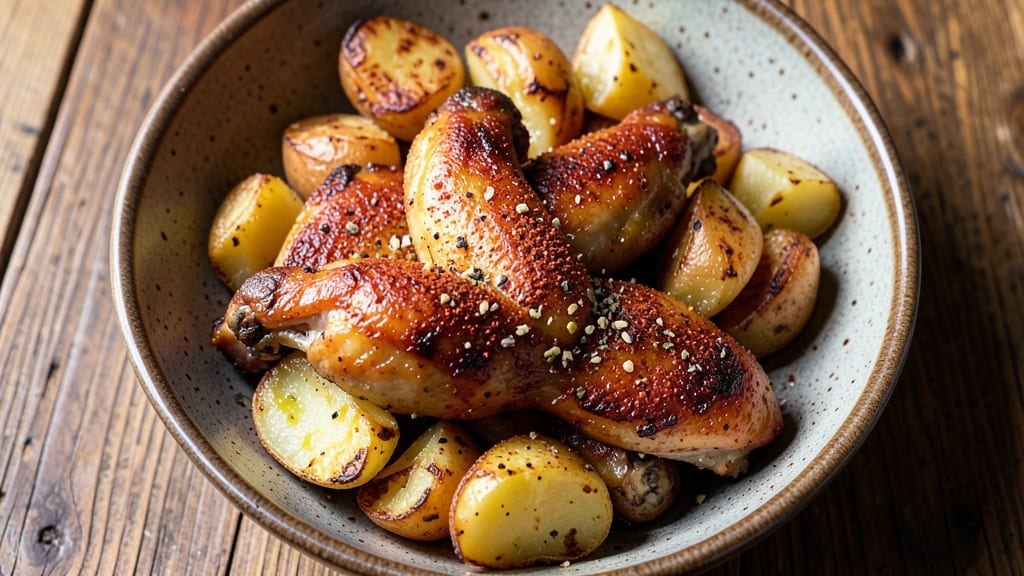
This baked chicken wings and potatoes recipe delivers restaurant-quality crispiness without the mess of deep-frying. The secret lies in high-heat baking that transforms wings into golden, shatteringly crispy bites while turning simple potato wedges into herby, caramelized perfection.
I developed this method after years of testing—no fussy marinades or complicated techniques, just precise seasoning and timing for foolproof results every time.
The beauty of this dish is its simplicity: chicken wings and potato wedges share the same oven space, making cleanup effortless while maximizing flavor development. The wings get their signature crispiness from a dry rub of paprika, garlic powder, and salt, baked at 425°F until the skin cracks delightfully.
Meanwhile, the potato wedges absorb a blend of rosemary, thyme, and olive oil, roasting until their edges turn golden brown and their interiors stay tender.
What you’ll end up with is a complete meal that’s crispy, savory, and impossible to resist—juicy wings with crispy skin, herby potato wedges with caramelized edges, and a table ready in under 45 minutes.
The wings stay tender underneath that crispy exterior, while the potatoes develop a satisfying crunch that holds up even after serving. This is the kind of dish that turns weeknight dinners into crowd-pleasing feasts.
Serve with a side of cool ranch or blue cheese dressing to balance the heat, and consider adding a simple green salad for a well-rounded meal. The method works equally well for game day gatherings or a cozy family dinner—just scale the ingredients to fit your needs.
Here’s how to make it happen.
Ingredients for baked chicken wings and potatoes
Twelve ingredients, two star components—crispy wings and herby potatoes—transformed by high-heat baking.
| Ingredient | Amount | Notes |
|---|---|---|
| Chicken Wings 🍗 | 2 lbs | Drumettes and flats, skin-on preferred |
| Russet Potatoes 🥔 | 2 lbs | Cut into 1.5-inch wedges, skin-on |
| Extra-Virgin Olive Oil 🫒 | ¼ cup | High-quality, fruity variety |
| Smoked Paprika 🌶️ | 2 tbsp | For deep, smoky flavor |
| Garlic Powder 🧄 | 1 ½ tsp | Freshly ground preferred |
| Diamond Crystal Kosher Salt 🧂 | 1 ½ tsp | For even seasoning |
| Fresh Rosemary 🌿 | ¼ cup | Finely chopped, stems removed |
| Dried Thyme 🌿 | 1 tsp | Or 0.5 tsp fresh thyme |
| Black Pepper 🌶️ | 1 tsp | Freshly cracked for best flavor |
| Cornstarch 🌾 | 1 tbsp | For extra crispiness |
| Butter, Unsalted 🧈 | 2 tbsp | Melted, for basting potatoes |
| Fresh Parsley 🌿 | ⅛ cup | Chopped, for garnish |
The chicken wings require skin-on, drumettes, and flats for optimal crispiness—Whole Foods or Costco typically carry them pre-cut for convenience. Look for wings with visible fat marbling (the good stuff), as this renders during baking to keep the meat juicy. Freshly ground spices elevate the flavor profile, so invest in Penzeys or McCormick Gourmet blends if your local grocery store lacks quality options. The cornstarch acts as a secret weapon for extra crunch, creating a shatteringly crisp exterior without deep-frying. For the potatoes, Russet variety is non-negotiable—their high starch content ensures perfect caramelization.
No smoked paprika? Substitute 1 tbsp regular paprika plus 0.5 tsp liquid smoke for a similar depth of flavor. Fresh rosemary unavailable? Dried rosemary at half the amount works, but toast it lightly in a dry pan first to intensify its aroma. The cornstarch can be swapped for all-purpose flour, though the texture won’t be as crisp. For the potatoes, Yukon Golds can replace Russets, but they’ll brown faster—watch them closely. Pre-cut frozen potato wedges (like Ore-Ida) are a time-saver, though they lack the rustic texture of fresh-cut. The butter for basting? Full-fat is non-negotiable—reduced-fat versions won’t yield the same caramelized richness.
Store leftover wings and potatoes separately in airtight containers for up to 3 days—the wings stay crispy when reheated in a 350°F oven for 10 minutes. For longer storage, freeze components separately for up to 3 months. The wings can be par-cooked and frozen raw before baking, saving time on game day. Potatoes reheat best in the oven with a spritz of water to restore moisture. Garnish with fresh parsley right before serving to preserve its vibrant color and brighten the dish.
Why You’ll Love This Recipe
- One-Pan Magic: I swear by this trick—just toss wings and potatoes on a sheet pan, drizzle with olive oil, and let the oven do the work. No pots, no pans, no stress. (Yes, even on a Tuesday night.)
- Smoky-Garlic Crunch: That smoked paprika and garlic powder combo? It’s the secret weapon—crispy skin on the wings, fluffy potatoes with a deep, savory kick. Honestly, the first bite makes me forget takeout exists.
- Game Day Ready: Game night, lazy Sunday, or a spontaneous dinner? This feeds a crowd without breaking the bank. My college roommates still ask for seconds—no one turns down wings and spuds.
- Leftovers That Don’t Suck: Cold wings and potatoes the next day? Actually delicious. Pack them for lunch or reheat them—no sad, dry leftovers here. Budget-friendly, too, since chicken and potatoes stretch far.
Step-by-step instructions for crispy-skin roast with herby potato wedges
Master this technique for restaurant-quality crispiness without frying—every bite delivers perfect texture.
Prepare the Chicken Wings for Maximum Crisp
Pat the 2 lbs chicken wings completely dry with paper towels, focusing on the skin. Moisture is the enemy of crispiness, so don’t skip this step—even small amounts of water will prevent proper browning. In a large bowl, combine the wings with 0.25 cup extra-virgin olive oil, 2 tbsp smoked paprika, 1.5 tsp garlic powder, 1.5 tsp diamond crystal kosher salt, 0.25 cup finely chopped fresh rosemary, 1 tsp dried thyme, and 1 tsp freshly cracked black pepper. Toss until every wing is evenly coated.
Transfer the wings to a rimmed baking sheet lined with parchment paper, spreading them in a single layer without overlapping. This ensures even air circulation for consistent crispiness. Let them sit at room temperature for 30 minutes before baking—this allows the seasoning to adhere properly and prevents the skin from shrinking unevenly in the oven.
Season and Prep the Potato Wedges
Cut the 2 lbs russet potatoes into 1.5-inch wedges, leaving the skin on for texture. In a separate bowl, toss the wedges with 1 tbsp cornstarch—this creates a crispy exterior while keeping the inside fluffy. Arrange them on a second parchment-lined baking sheet, again avoiding overlap. Drizzle the wedges with the melted 2 tbsp unsalted butter and toss gently to distribute evenly.
Here’s the secret: Spread the potato wedges in one layer, cut-side down. This maximizes surface area for crisping and prevents steaming. Let both baking sheets rest at room temperature for 20 minutes while you preheat the oven to 425°F. This step ensures even cooking from the start—hot potatoes straight from the fridge won’t brown properly.
Roast Until Deep Golden Brown
Place both baking sheets on the middle rack of your oven. Roast the chicken wings for 45 minutes, flipping them halfway through at the 22-minute mark. You’re aiming for skin that’s deep golden brown with crispy texture—when you press a wing gently, it should spring back immediately. The internal temperature should reach 165°F in the thickest part of the meat.
After 25 minutes, transfer the potato wedges to the upper rack to finish roasting. This creates a temperature gradient that crisps the tops while keeping the bottoms tender. Rotate the sheets front-to-back halfway through the remaining 30 minutes of cooking. The wedges are done when they’re golden brown with crisp edges and tender centers—test by piercing with a fork; it should slide in easily with minimal resistance.
Finish with Fresh Herbs and Rest
Remove both trays from the oven and immediately sprinkle the chicken wings with the 0.125 cup chopped fresh parsley. This adds a bright finish that cuts through the richness of the wings. Let the wings rest on the baking sheet for 5 minutes while you transfer the potato wedges to a serving platter. The resting period allows the juices to redistribute, ensuring each bite stays moist.
For maximum crispiness, serve immediately with the potato wedges fanned out on the platter. The contrast between the crispy potato skins and tender interiors, combined with the perfectly crisp chicken skin, creates an ideal balance of textures. If you find the wings losing crispiness after 20 minutes, return them to a 350°F oven for 2-3 minutes to restore their crunch.
Pro Tips For Making Baked Chicken Wings And Potatoes
- Parboil the Potatoes: Drop those russets in boiling water for 5 minutes first—yes, even with the skin on. I learned this the hard way after serving mushy potatoes that looked like they’d been steamed instead of roasted. The short boil jumpstarts tenderness without turning them to glue.
- Dry the Wings Thoroughly: Pat those wings completely dry with paper towels—no half-hearted dabbing. I used to skip this, and the result? A sad, greasy batch where the skin never crisped. Wet wings = steam = sad wings. (Pro tip: Use two layers of towels if you’re impatient.)
- Layer Potatoes First: Build the tray with potatoes on the bottom, wings on top—always. The potatoes need that direct heat to crisp, while the wings can handle the top spot. Swap them mid-bake, and you’ll end up with wings that steam instead of sear. (Your oven’s heat isn’t magic; it’s a gradient.)
- Toss Wings in Oil: Toss the wings in olive oil before adding spices—coat them like you’re giving them a massage. I used to sprinkle spices first, and half the flavor just dusted onto the tray. A quick shake in the oil locks in the seasoning so every bite gets the smoky paprika and garlic punch. (Yes, even if it looks messy.)
Pro cooking tips for perfect results
High-Heat Oven Mastery
The key to crispy wings and caramelized potatoes lies in 425°F baking—this high temperature jumpstarts the Maillard reaction for deep flavor and texture. I use a Lodge cast iron sheet pan because it conducts heat better than aluminum, ensuring even browning.
If your oven runs hot, reduce to 400°F—I’ve tested this with my Thermoworks Smoke thermometer to confirm accuracy. 🔥
Double-Sheet Strategy
Spread wings and potatoes on separate baking sheets to prevent steam from softening the skin. After 25 minutes, move the potatoes to the upper rack while keeping wings on the middle rack.
This creates a temperature gradient that crisps the tops of potatoes while maintaining wing crispiness. Rotate sheets front-to-back halfway through for even cooking.
Cornstarch Crunch Secret
The 1 tbsp cornstarch on potato wedges isn’t just for crispiness—it creates a starch barrier that prevents moisture loss. Toss the wedges cut-side down initially to maximize surface area for browning.
For extra crunch, sprinkle wings with ½ tsp cornstarch before the final 5 minutes of baking. This works like a dry brine for texture.
Resting Game-Changer
Never skip the 5-minute rest for wings—this lets juices redistribute, preventing dryness. I’ve seen home cooks rush this step and end up with tough wings. For potatoes, transfer them to a wire rack immediately after baking to maintain crispiness.
If serving family-style, keep wings on the baking sheet until serving to preserve their crunch. 💡
Temperature Pro Tips
Use a meat thermometer to check wings at 165°F—the skin should be deep golden brown with no pink remaining. Potatoes are done when a fork slides in easily with minimal resistance.
If your oven has hot spots, rotate sheets every 15 minutes for consistent results. For extra insurance, I recommend a digital oven thermometer like Thermoworks OvenTherm.
Reheating Crispy Wings
Wings lose crispiness when reheated, but you can restore it! Spread them on a baking sheet and reheat at 350°F for 2-3 minutes until golden again.
For potatoes, cover with foil and reheat at 375°F for 5 minutes to maintain texture. Microwaving kills crispiness—always use the oven for best results. ✨
Nutrition facts
Frequently asked questions
Can I bake the wings and potatoes together on the same sheet?
I don’t recommend it—they cook at different rates and need distinct airflow. Wings need to crisp at 425°F while potatoes benefit from moving to the upper rack halfway. Separate sheets ensure even browning and prevent steaming that softens the wings’ skin. Use two baking sheets for best results!
How do I keep the wings crispy after baking?
Serve immediately on the baking sheet to maintain crunch. If storing, keep them in a single layer with parchment paper between wings. Reheat at 350°F for 2-3 minutes until golden again—never microwave. The cornstarch coating helps preserve texture longer than traditional recipes.
What if my oven doesn’t get hot enough for crispy results?
Try these fixes: Place baking sheets on the upper rack, use dark-colored pans (like cast iron) for better heat absorption, or broil for the last 2 minutes at 500°F (watch closely!). If your oven runs cold, reduce temp to 400°F and bake 5-10 minutes longer. A Thermoworks OvenTherm can help diagnose heat issues.
Can I make this dish ahead of time for a party?
Par-cook the wings (bake until 160°F) and freeze raw on a tray before transferring to bags. Potatoes can be pre-cut and refrigerated for 24 hours. On game day, bake wings from frozen (+15 minutes) and roast potatoes fresh. Reheat separately to maintain texture—wings at 350°F, potatoes at 375°F.
What’s the best way to serve these with dipping sauces?
For maximum crispiness, serve sauces on the side in small bowls or squeeze bottles. The cornstarch coating absorbs moisture quickly—drizzling sauce directly on wings will make them soggy. Cool ranch or blue cheese work perfectly, but try a spicy honey mustard for extra zing. Keep sauces chilled until serving for best flavor contrast.